
Nurturing Next-Generation Leaders: NTU Students Conclude Experiential Sustainability Programme
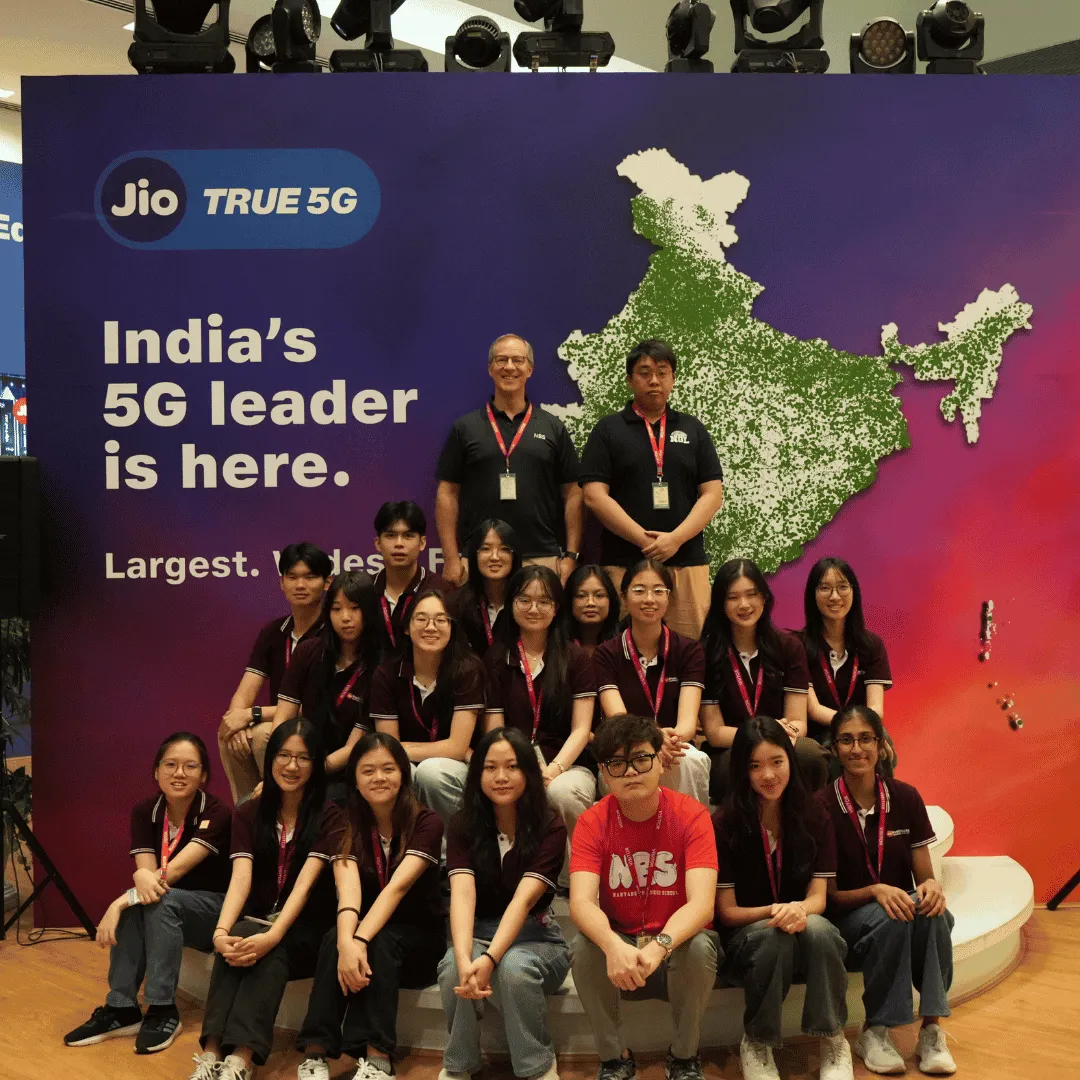
India has increasingly established itself as an essential destination for international students seeking to understand contemporary economic and industrial transformation. As the world’s sixth largest economy and the fastest-growing major nation (GDP growth rate of 7.2 %) India is internationally recognized for aligning rapid economic growth with large-scale digitalization, climate resilience, and citizen-first outcomes. Through its dedicated India Immersion initiatives, Jio Institute offers global cohorts a window into this transformation directly from Mumbai, the nation’s commercial and financial centre.
The Global Leaders Cohort of 2026
37 undergraduate students from Nanyang Business School (NBS), Nanyang Technological University (NTU), Singapore, completed the Global Leaders Programme (NGL) India Immersion on Strategic Projects in Sustainability 2026 from 26 September to 3 October 2026 at Jio Institute. This initiative builds on a solid foundation of cross-border learning in India, following over 90 students from leading Singaporean institutions including Singapore University of Social Sciences (SUSS) and Singapore Management University (SMU) who have completed five curated immersion programmes at Jio Institute over the past couple of years.
The cohort was accompanied by faculty mentors Prof. Matthew Louis Dearth and Prof. Pathak Abhay Vijay, alongside Programme Coordinator Mr Liang Weijie. To ensure purposeful immersion, the programme was designed around applied project inquiry. Prior to arriving on campus, students were assigned strategic challenge statements and paired with academic and industry mentors. Their Mumbai immersion was curated to directly inform these projects, focusing on three major areas: green mobility ecosystems, industrial supply chain decarbonization, and circular economy models.
Academic Dialogues and Macro Frameworks
The academic curriculum provided the macro context for these projects. Dr Shailesh Kumar, Dean, led a masterclass on Digitalization in India, detailing how public digital platforms like UPI and emerging artificial intelligence applications drive economic inclusion across essential sectors. Ms Mitika Bajpai, Deputy General Manager of Sustainability, RIL, examined corporate ESG models, decarbonization investments, and climate resilience frameworks in emerging markets. Broadening the geopolitical dimension, students interacted with Ms Persis Gan, Vice-Consul (Political), Consulate-General of the Republic of Singapore in Mumbai, discussing bilateral trade, clean tech corridors, and commercial partnerships across the ASEAN-India region.
Industry Immersion and Capstone Evaluations
The industrial component took the students into live operating environments. At Reliance Corporate Park in Navi Mumbai, the delegation explored the 5G Experience Zone, the Network Operations Center, and the Retail Experience Zone to evaluate telecommunications infrastructure, digital automation, and supply chain logistics. A visit to the Reliance BP Mobility Limited (Jio-bp) headquarters and a fuel retail station allowed students to explore EV charging infrastructure and examine consumer adoption patterns on the ground. The cohort also completed a comprehensive technical tour of the Nagothane Manufacturing Division, observing energy-efficient petrochemical processing, closed-loop water treatment, and mechanical plastics recycling at scale.
Throughout the week, the students refined their projects under the guidance of industry mentors, including Shri Niraj Ambani, Group President of Supply Chain, RIL, and Mr Firoz Nedumpally, General Manager of Mechanical Recycling (O2C), RIL. The immersion concluded with capstone presentations where the student teams pitched data-backed implementation roadmaps to a joint panel of NTU faculty and Reliance executives.
Cultural Context and Leadership Development
Rounding out their experience, the students undertook curated cultural visits to South Mumbai’s landmarks, including the Gateway of India, the UNESCO-listed Chhatrapati Shivaji Maharaj Terminus, and the Kala Ghoda arts precinct, gaining a well-rounded appreciation of the city’s heritage, diversity and commercial energy.
By uniting rigorous academics, operational site visits, and applied consulting, the immersion successfully advanced the global perspectives and problem-solving capabilities of these emerging business leaders.