
Jio Institute and INSMA: Charting the Course for India’s Olympic Vision 2036
In the sprawling, sunlit campus of Jio Institute in Navi Mumbai, a palpable sense of anticipation filled the air on 19 December 2025. It wasn’t just the gathering of academia and industry that charged the atmosphere; it was the gravity of the subject at hand. As the second edition of the Indian Sport Management Conference (ISMC 2025) unfolded, the conversation moved beyond the theoretical to the tangible: India’s roadmap to the 2036 Olympic Games.
Hosted in collaboration with the Indian Sport Management Association (INSMA), the conference centred on the theme "Olympic Vision 2036: Converging India's Aspirations, Capabilities and Competencies for a Global Sporting Stage." It served as a high-impact crucible where policymakers, athletes, and global experts dissected the machinery required to transform a nation of a billion sports fans into a global sporting powerhouse.
Setting the Stage
The day began with a Welcome Address by Dr Palak Sheth, Project Director. He set the tone for the proceedings, welcoming the distinguished speakers and over 200 delegates, while underscoring the Institute's commitment to building a knowledge ecosystem for Indian sport.
Dr Dipak Jain, Vice Chancellor, followed with special remarks that placed the day’s events into a broader socio-economic context. He emphasised that sport is no longer just recreation but a critical vertical of nation-building. "If you have to brand India, it is going to be the global hub for human talent," Dr Jain remarked, "and developing sports as a comprehensive discipline, akin to marketing, finance or other business fields is truly remarkable."
Voices from the Global South and National Strategy
The narrative arc of the morning session traversed from global experience to national execution. Dr Sarthak Mondal, President of INSMA, delivered the opening address, paving the way for the Keynote Speaker, Dr Kamila Swart-Arries from Hamad Bin Khalifa University, Qatar.
Dr Swart-Arries brought a poignant perspective from her time with the 2004 Cape Town Olympic bid, drawing parallels between South Africa’s past aspirations and India’s current trajectory. "In a Western-dominated area and growing up in South Africa, it was always about finding a place for the Global South in mega-events like the Olympics," she reflected. Her assessment of the current landscape was optimistic: "India is poised at a lucrative time, where the IOC’s disposition is aligned more with the country’s values."
The strategic imperative was then laid out with military precision by Col N.S. Johal, CEO of the Target Olympic Podium Scheme (TOPS), SAI. His address was a clarion call for focused excellence. "The aim is very clear," Col Johal stated. "We have clear directives from the Hon’ble Prime Minister—India must be among the top 10 sporting nations by 2036, when India aspires to host the Olympics, and among the top five by 2047.”
A Vision for Sustainability
Ms Vita Dani, Co-Owner, Chennaiyin FC; Chairperson, Ultimate Table Tennis and Promoter, Dani Sports Foundation, graced the event as the Chief Guest. In an address that balanced passion with pragmatism, she invoked Nelson Mandela to remind the audience that "Sport has the power to change the world, it has the power to inspire, it has the power to unite people, in a way that little else."
However, Ms Dani moved quickly beyond sentiment to the nuts and bolts of ecosystem building. She argued that medals are merely the tip of the iceberg. "The success of a sporting system cannot alone be measured by the podium finishes, but also by the ecosystem that produces the athletes," she noted, advocating for robust interventions ranging from grassroots identification to high-tech performance management.
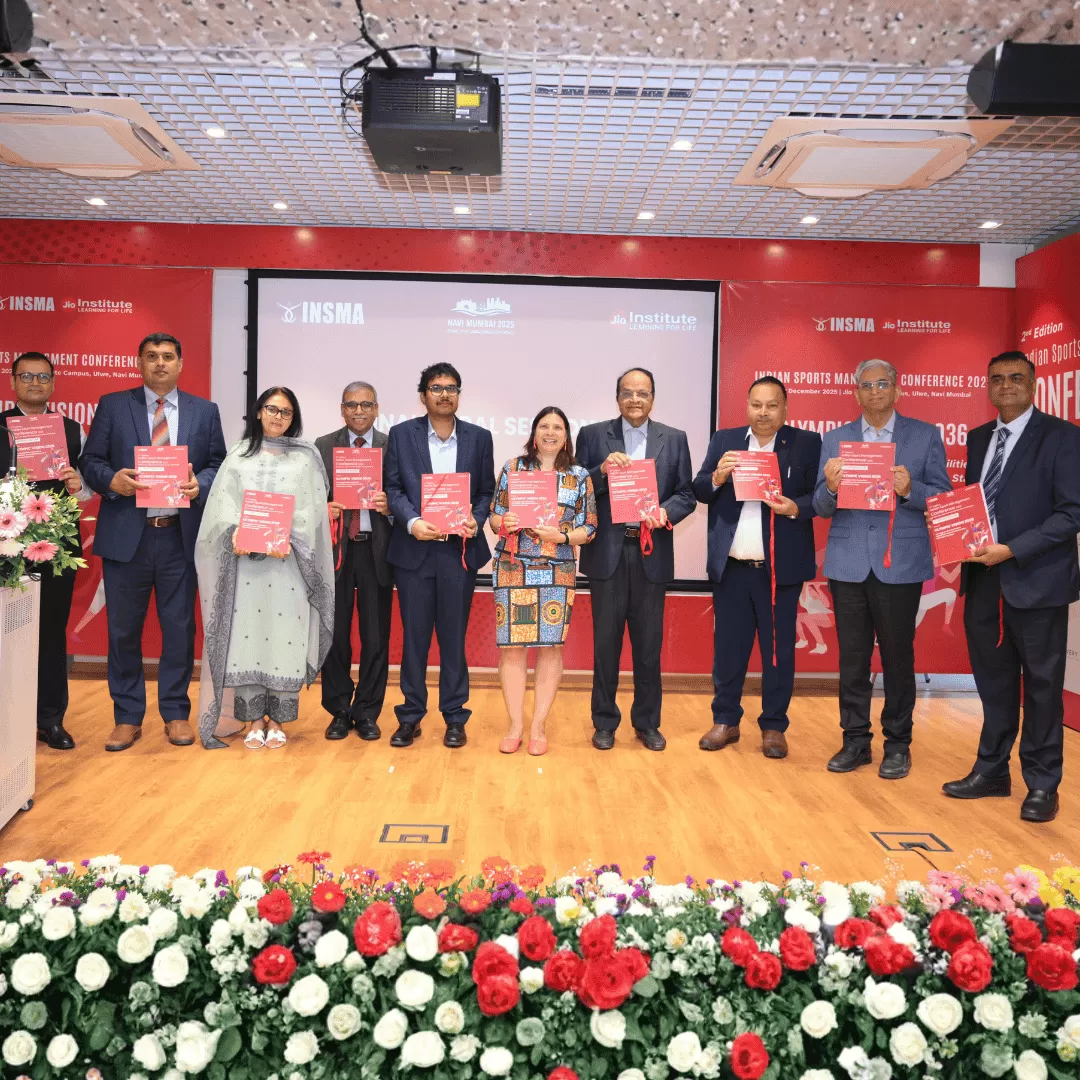
The inaugural session culminated in the unveiling of the ISMC 2025 Research Compendium and the felicitation of Reliance Foundation athletes Kishore Jena and Ancy Sojan.
Infrastructure, Policy, and Technology
As the day progressed, the focus shifted to the 'how' of the Olympic dream. Shri Narendra Modi, General Manager (Planning & Coordination) at GSID, provided a deep dive into the infrastructure readiness required for mega-events, shedding light on the silent but massive work happening behind the scenes to prepare Gujarat and India for the global stage. “Infrastructure is the bedrock of our Olympic ambition. In Gujarat, we are not just building stadiums but creating a comprehensive sports ecosystem. From the Sardar Vallabhbhai Patel Sports Enclave to district-level complexes, our goal is to ensure that when India hosts the world in 2036, our facilities stand as a testament to global excellence and execution.”
The day continued with two robust panel discussions. The first, 'Olympic Vision 2036,' saw experts from Deloitte, the GoSports Foundation, and JAIN University, alongside Paralympian Padma Shri KY Venkatesh, deliberate on building an inclusive sporting nation. They dissected the need for policy continuity and the integration of para-sports into the mainstream narrative.
Post-lunch, the conversation turned digital. Dr Shailesh Kumar, Dean, explored the intersection of technology and sport, setting the stage for the second panel: 'Data, Tech & the Future of Sports Management in India.' This session was a fascinating exploration of how data science is redefining performance analysis and fan engagement, featuring speakers from ATIUM Sports, Khelo Tech, and the Inspire Institute of Sport.
New Frontiers and Academic Excellence
A fireside chat on 'Motorsports in India' offered a fresh perspective. Experts discussed the structural shifts needed to transition Indian motorsport from a spectator pastime to a competitive discipline, highlighting the diverse opportunities within the sports industry beyond traditional Olympic disciplines.
Underpinning the entire conference was a strong current of academic rigour. Around 25 research papers were presented across four thematic tracks, covering topics like grassroots talent identification, high-performance athlete training, integration of data and technology into performance management, sports infrastructure development, governance, and sustainability, critical pillars for hosting the Olympic Games. The event concluded with a Valedictory & Award Ceremony.
As the delegates dispersed, the sentiment was clear: INSMA 2025 was not just a conference; it was a statement of intent. By successfully bridging the gap between academia, industry, and policy, Jio Institute and INSMA have helped lay the intellectual foundation for India’s march towards 2036.