
CRISPR-Cas Genome Editing Workshop
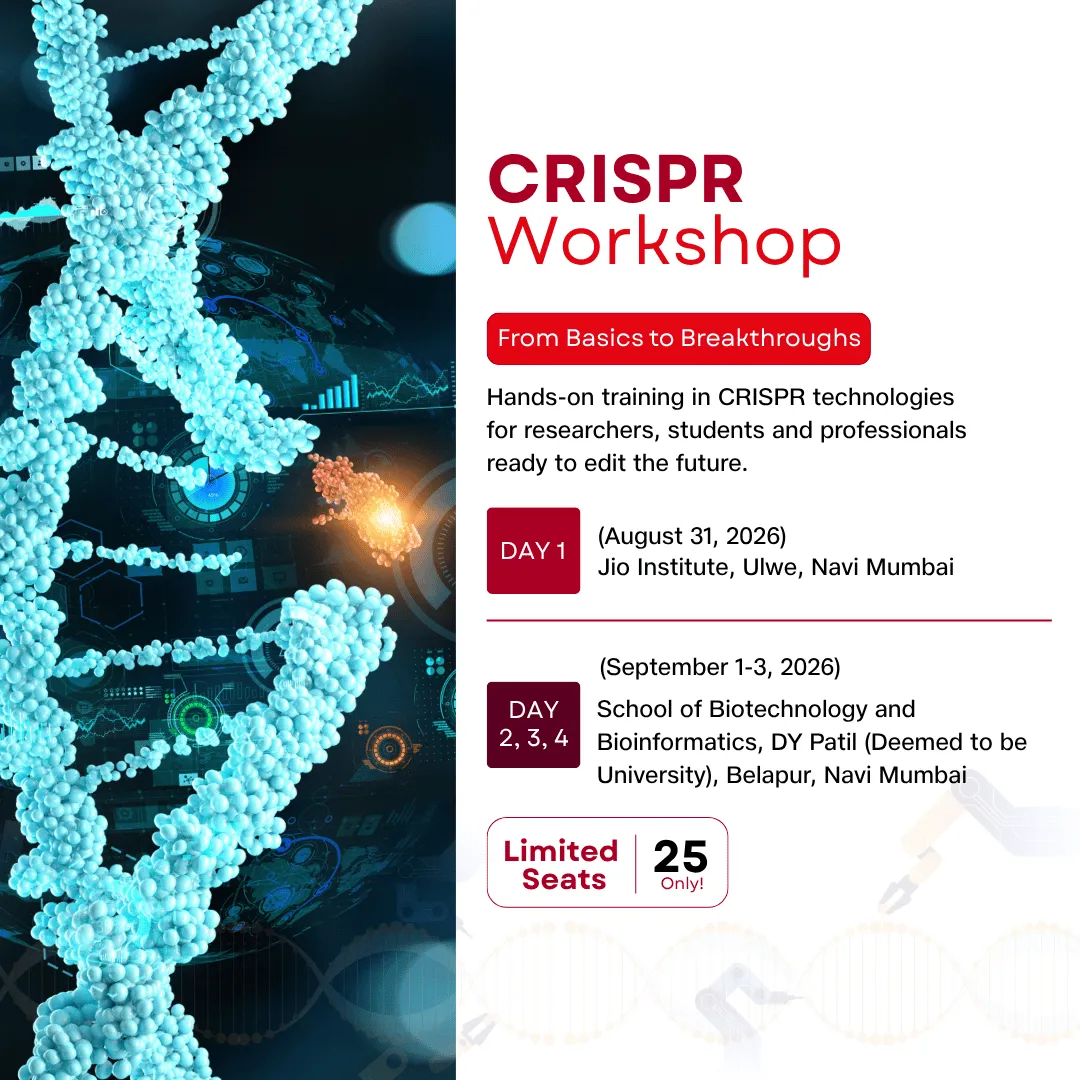
Session Description
The four day hands-on Workshop on CRISPR-Cas Genome Editing gives students, researchers, academicians, and biotechnology professionals a comprehensive understanding of one of the most transformative technologies in modern biology and direct experience applying it at the bench. It pairs expert lectures with laboratory demonstrations, guided experiments, AI-assisted CRISPR design tools, and case-based learning. Participants train in molecular cloning, sgRNA design, CRISPR editing workflows, mammalian cell culture, and advanced genome editing methods.
CRISPR-Cas now sits at the centre of work in biomedical research, agriculture, and precision medicine This workshop equips participants with the knowledge and technical skills needed to contribute to cutting-edge research and innovation in the rapidly evolving biotechnology and life sciences sectors.
Learning Outcomes
Day 1: Foundations of CRISPR-Cas Genome Editing
- Understand the fundamentals of molecular biology, DNA repair, and genome editing.
- Learn the mechanism, components, and applications of the CRISPR-Cas system.
- Gain hands-on experience in single-guide RNA (sgRNA) design using bioinformatics tools.
Day 2: Molecular Cloning and the CRISPR Workflow
- Understand the principles of molecular cloning and plasmid construction.
- Perform restriction digestion, ligation, gel electrophoresis, and DNA purification.
- Learn the complete CRISPR genome editing workflow through hands-on laboratory sessions.
Day 3: Cell Culture and CRISPR Applications
- Gain practical training in mammalian cell culture techniques and bacterial transformation.
- Learn CRISPR delivery strategies and experimental workflows in cultured cells.
- Explore applications of CRISPR in biotechnology, biomedical research, and therapeutics through interactive case studies and discussions.
Day 4: Advanced Genome Editing and Future Perspectives
- Explore AI-assisted CRISPR tools, base editing, prime editing, and CRISPR-based diagnostics.
- Understand the clinical applications, ethical considerations, and regulatory landscape of genome editing.
- Gain insights into industrial applications, translational research, and emerging trends through an industry presentation.
Who Should Attend
- Bachelors and Masters Students: Undergraduate and postgraduate students in biotechnology, life sciences, molecular biology, and related fields looking to build hands-on laboratory skills and foundational knowledge in gene editing.
- PhD Students & Doctoral Candidates: Researchers aiming to integrate advanced CRISPR-Cas workflows, sgRNA design, and molecular cloning techniques into their academic research projects.
- Postdoctoral Fellows & Academicians: Research scholars, faculty members, and educators looking to expand their expertise in modern genome editing, cell culture delivery, and emerging techniques like base/prime editing.
- Industry Professionals & Biotechnology Experts: R&D specialists, biopharmaceutical researchers, and industry personnel seeking practical insights into translational research, CRISPR diagnostics, and industrial applications.
- Biomedical & Life Sciences Researchers: Professionals working across precision medicine, biomedical research, and therapeutics who want to explore practical case studies and AI-assisted CRISPR design tools.